

Welcome.
When the Inn Season Café opened its doors in 1981,we made a commitment to serve the community fresh, wholesome food. We continue to honor that commitment
by serving a vegetarian-vegan plant based diet using the best products we can procure. All of our food is prepared in-house with love and careful attention to detail.
Since opening, we have supported our local farming community through direct contact with farmers and through farmers markets. Every incoming order is inspected to ensure it conforms to our standard of quality.
Also, as part of our commitment to sustainability, we have transitioned from non-renewable carryout materials to compostable and recyclable products. All of our packaging materials—bottles, can and plastics—are recycled and most of our vegetable trimmings are composted.
We look forward to continuing our service to the community and thank our customers for their loyal support.
Please Note: All of our food is prepared without animal products except where noted. Our food is prepared to order to maintain its freshness and integrity. Please be patient. Nuts and soy products are used in many of our dishes, if you have allergies, please advise your server.
500 East Fourth Street
Royal Oak, Michigan 48067
Free street parking around the facility is available. Metered street parking nearby.
Hours:
Tuesday thru Thursday: 11:30 a.m. -9:00 p.m.
Friday : 11:30 a.m. – 9:30 p.m.
Saturday: Noon – 9:30 p.m.
Sunday for Brunch: 11:00 a.m. – 3 p.m.
Closed Monday.
About Inn Season
Dedicated to your Well-being for over 39 years!
Fresh Food from Farm to Table
The Inn Season Cafe is the premier organic vegan/vegetarian restaurant in Michigan. Since 1981, we have strived to present our customers with skillfully prepared dishes using the freshest organic, seasonal, and locally grown ingredients. Our menu reflects the best of classic, as well as inventive world cuisine. We believe good food is intrinsically healthy and is meant to be hearty and satisfying. Though we are dedicated to serving the vegetarian and vegan community, we hope everyone will enjoy the home-cooked flavors of the Inn Season Cafe!
We at the Inn Season Cafe are dedicated to your health through our commitment to excellent vegetarian cuisine. Our inspired creations are comprised of a seasonal array of organic ingredients, grown without the use of pesticides and other chemicals which have debilitating consequences for both our farmlands and our health. Supporting local organic farming acknowledges the interconnectedness of our environmental, spiritual and physical well-being. We are delighted to nourish your body with delicious meals served in a vibrant and friendly atmosphere. We invite you to enjoy the good food that comes fresh from the farm to your table.
NOTE: All of our food is prepared without the use of animal products (unless otherwise noted on the menu). Most foods and grains are organically grown with as many as possible from local farms. The soups are our own recipes, using fresh herbs, and all foods cooked in healthy oils. We use no food colorings, preservatives, refined sugar or bleached flour, microwaves, etc. Our bread is baked daily from organic wheat and rye grains. Most importantly, our food is prepared with a passion for what we do.
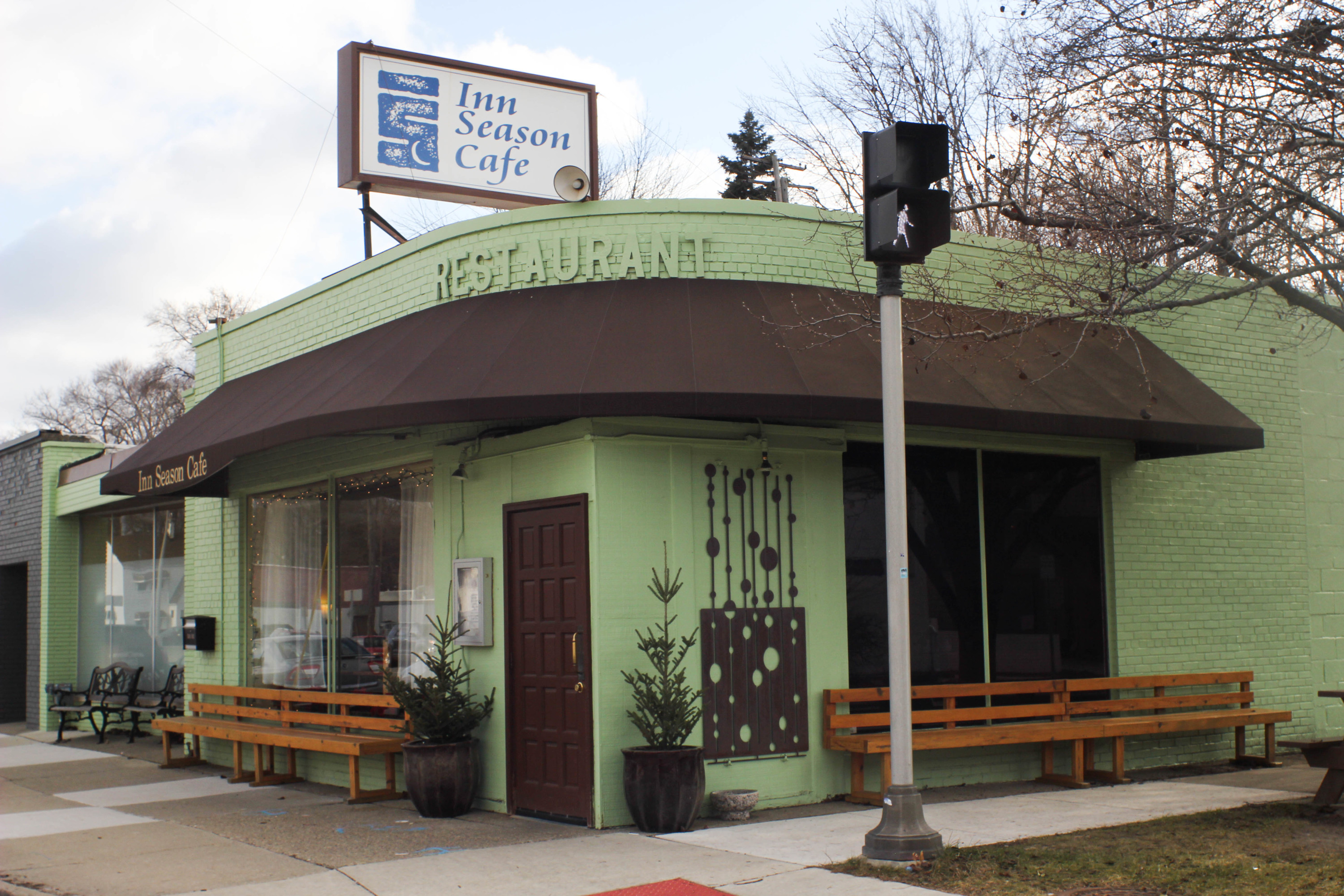
The Inn Season Cafe combines a clean, modern design and natural woods to create a soothing and comfortable dining retreat in Metro Detroit. The Inn Season Cafe is the perfect ambiance in which to experience innovative cuisine that is both delicious and life-enhancing.


Menu
(GF) = Gluten Free | (SF) = Soy Free | (WF) = Wheat FreeCall for Daily Specials | 248.547.7916

Appetizers.
Black Bean Avocado Quesadilla (SF)

**Gluten-free Brown Rice Tortilla may be substituted for additional 50¢ charge.
Santorini Plate (SF)
Red Pepper Hummus (SF)
Shiitake Mushroom Sauté (GF)
Soups.
-
Daily Soup Special (GF/SF)

-
Chili (GF/SF)

Seasonal
-
Gazpacho (GF/SF)
Seasonal
Salads.
Café (GF/SF)
Mesclun lettuces garnished with tomato, cucumber, marinated red onion and sunflower sprouts. Served with your choice of dressing.
Caesar (SF/Dairy only)
Caesar-style salad tossed with Caesar dressing using romaine lettuce, tomato, marinated red onion, cucumber and topped with house-made, whole grain herb croutons. Prepared without eggs or anchovies.
Roland Greens (GF)

Mesclun lettuces tossed with balsamic vinaigrette and topped with sunflower sprouts, tofu, raisin-nut mix, tomato, marinated red onion, cucumber and your choice of cheese, vegan Daiya cheese or avocado.
Bleu Cheese & Walnut (GF)
Mesclun lettuces tossed with balsamic vinaigrette and topped with garlic-roasted walnuts, bleu cheese, tomato, marinated red onion, cucumber, balsamic raisins and sunflower sprouts.

Greek (GF/SF)
Romaine lettuce, roasted beets, feta cheese, tomato, garbanzo beans, cucumber, Kalamata olives and marinated red onion. Served with Greek dressing on the side.
Mediterranean (SF with choice of Feta)
Whole-wheat noodles tossed with Greek dressing, tomato, cucumber, Kalamata olives, roasted beets, artichoke hearts, marinated red onion and topped with your choice of Feta cheese or garlic-roasted walnuts.

Brown Rice Salad (GF/SF)
Brown rice tossed with sweet red peppers, cucumber, scallion, celery, carrot, fresh herbs, pecans, currants, garlic, lemon and olive oil. Served on a bed of mixed greens.
Inn Season (GF)
Robust salad of romaine lettuce, broccoli, cauliflower, carrot, red cabbage, tomato, cucumber, garbanzo beans, sunflower sprouts, marinated red onion and raisin-nut mix. Served with your choice of dressing.
Choose from these toppings: sautéed tofu, cheese, vegan Daiya cheese or avocado. (SF without tofu and with SF dressing)
- Small includes one topping – additions will be $1. each
Large includes two toppings – additions will be $2. each
Choose from the options below to add to any salad.
Kalamata olives, balsamic raisins, raisin-nut mix or artichoke hearts. Garlic-roasted walnuts, salad tofu. Brick cheese, vegan Daiya cheese, Feta, Bleu, or Chevre cheese, avocado, roasted beets, or sautéed tofu (SF without tofu and with SF dressing)
- Small includes one topping – additions will be $1. each
Available Dressings. (All GF)
- Balsamic Vinaigrette (SF)
Olive oil, salt, pepper and balsamic vinegar
- Sesame Ginger Vinaigrette (SF)
Sesame oil, garbanzo miso, brown rice vinegar, ginger, lemon juice, salt and pepper
- Caesar (SF/Dairy only)
Pommery mustard, olive oil, sour cream, asiago cheese, spices and garlic
- Greek (SF)
Olive oil, red wine vinegar, lemon juice, garlic, salt, pepper and herbs
- Tahini
Sesame butter, lemon juice, orange juice, cider vinegar, garlic, safflower oil, maple syrup, tamari, herbs and spices
- Thousand Island
Non-dairy mayo, tomato, red pepper, scallions, cider vinegar, onion, pickles and capers
- Honey Poppy Seed (SF)
Safflower oil, Dijon mustard, honey, poppy seeds and vinegar
- Also Available
Lemon, extra virgin olive oil, balsamic vinegar, ume plum vinegar, and cider vinegar
- Balsamic Vinaigrette (SF)
Burgers.
Fourth Street Burger
House-made multi-grain patty (oats, lentils, brown rice, millet, cracked wheat, cornmeal, sesame seeds, sunflower seeds) served on our whole grain bun with cheese or vegan Daiya cheese, sautéed onions, lettuce, and tomato. Served with coleslaw, blue corn tortilla chips and your choice of sauce.
Tempeh Burger
Flavorful tempeh (cultured soy) patty served on our whole grain bun with cheese or vegan Daiya cheese, sautéed onions, lettuce and tomato. Served with coleslaw, blue corn tortilla chips and your choice of sauce.
The Big Baprawski
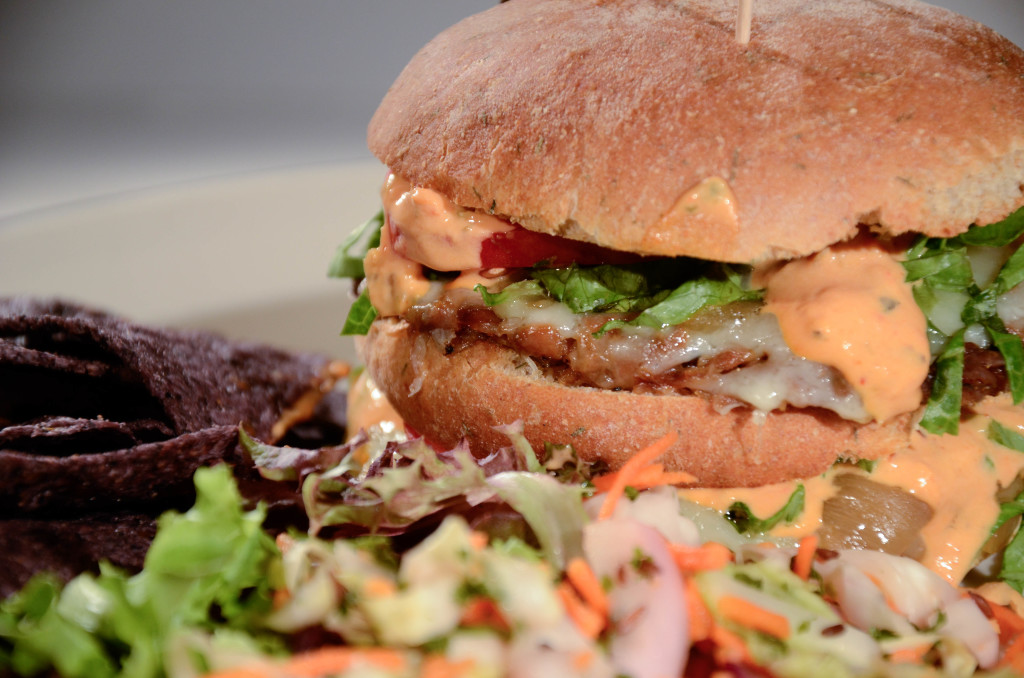
Flavorful tempeh patties served double-decker on our whole grain bun with cheese or vegan Daiya cheese, sautéed onions, lettuce and tomato. Served with coleslaw, blue corn tortilla chips and special Thousand Island sauce.
Portabella Burger
Baked mushroom cap (seasoned with balsamic vinegar, fresh basil, tamari) served on our whole grain bun with cheese or vegan Daiya cheese, sautéed onions, lettuce, and tomato. Served with coleslaw, blue corn tortilla chips and your choice of sauce.
Stir Fries. (All GF)
Classic (can be made SOY FREE)

Tofu Arame (can be made SOY FREE)
Cashew Ginger (can be made SOY FREE)
Whole-wheat noodles may be substituted for an additional charge of $1.5 - All stir fries may be made spicy
Mexican
Botana (GF)
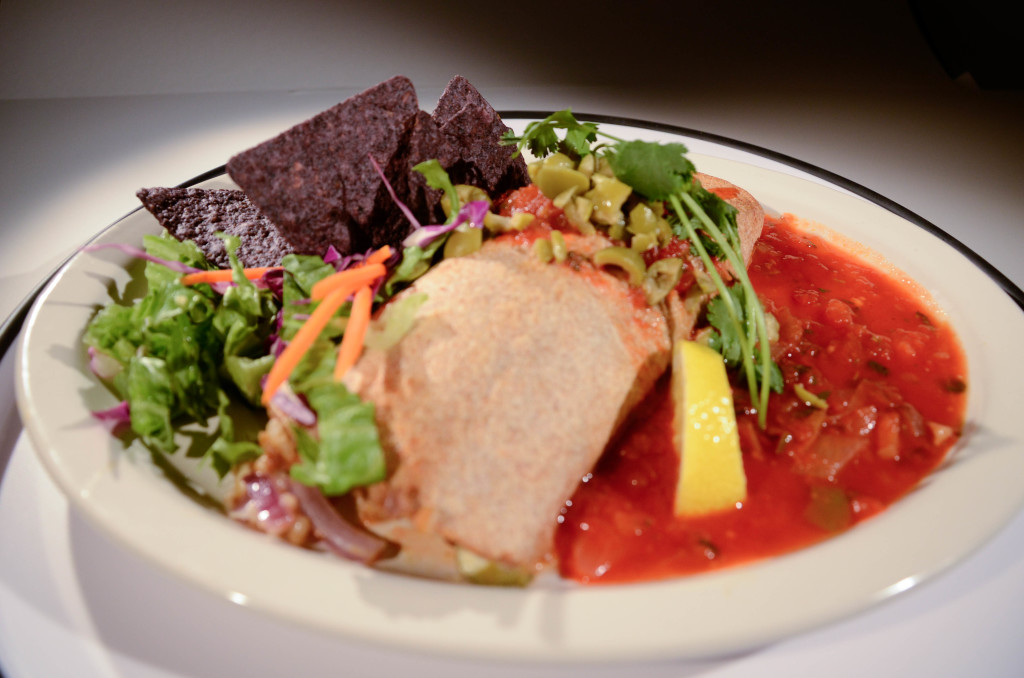
Blue corn tortilla chips topped with pinto beans, green pepper, tomato, green olives and red onion. Baked with cheese or vegan Daiya cheese. Topped with avocado and served with a side of house salsa.
Enchiladas Coloradito (GF/SF)
Corn tortillas wrapped around black beans and your choice of cheese
or vegan Daiya cheese. Served with house-made ancho chile salsa, sautéed onions, tomato, green pepper, green olives, lettuce and brown rice.Quesadilla Grande (SF)
Whole-wheat tortilla** folded over black beans, onion, tomato, green olives and cheese or vegan Daiya cheese. Served with avocado, lettuce, tomato, red onion, green olives and house salsa.
San Antonio Burrito
Whole wheat tortilla** filled with pinto beans, brown rice, lettuce, tomato, onions and cheese or vegan Daiya cheese. Served with house salsa, green olives and blue corn chips.
Other Selections
Spaghetti (SF)
Rich house-made marinara sauce over whole wheat noodles. Fresh grated Asiago cheese or vegan Daiya cheese tops off this dish. Can be made with baked cheese for an additional $1.50.
Macro Combo (GF)
Brown rice, steamed kale, sea vegetable, and your choice of sautéed tofu, tempeh, or adzuki beans (SF with this option). Served with shiitake-miso sauce and garnished with The Brinery saurkraut.
Shanghi Noodle Factory (Can be made SF)
Whole-wheat noodles with shiitake-miso sauce and your choice of sautéed tofu, tempeh or sea vegetable (SF with this option). Served with steamed broccoli. Garnished with nori strips, daikon, scallions and sesame seeds.
Side Dishes and Extras.
-
Steamed Vegetable Plate (GF/SF)
Three vegetables.
-
Steamed Vegetable (GF/SF)
-
Organic Brown Rice (GF/SF)
-
Organic Beans
(All GF)
Adzuki (SF), Black (SF), Pinto -
Organic Tofu or Tempeh
(GF)
Seasoned with Sesame Dijon, Ginger Tamari, or Garlic Herb -
Peanut Sauce (GF)
-
Shiitake-Miso Sauce (GF/SF)
-
Salsa or Ancho Chile Salsa
(GF/SF)
-
Cheese , Vegan Daiya Cheese
(GF/SF)
-
Avocado or chips
-
Coleslaw (GF/SF)
-
Sea Vegetable
(GF/SF)
-
Flat Bread (SF)
Available Dinner Only
Beverages.
Smoothie (GF/SF)
All fruit. A refreshing blend of strawberries, bananas and apple juice.
Sipp Sparkling Organic Sodas
-Ginger Blossom (agave), Lemon Flower (agave), Mojo Berry (agave), Summer Pear (Honey)
Virgil's Root Beer
Juices – Fresh Made (GF/SF)
Start with organic carrot and add any of the following: apple, beet, celery or fresh ginger.
China Cola
Ginger Beer
Eden Organic Apple Juice
Organic Lemonade
Sweetened with Agave nectar (no sugar)
San Pellegrino Water (16.9 oz.)

Sweets and Entrees.
-
Assortment of delicious flavors.
-
Salsa (GF/SF)
-
Cornbread (GF)
Sweetened with Maple Syrup.
-
House-made with organic grains and sweeteners.
Hearty Breakfasts
Granola (WF)
Our house mix of oats, nuts, seeds, cornmeal, raisins and maple syrup. Served with organic milk, soymilk or yogurt (traditional or soy).
Pancakes
Three organic multigrain pancakes served with Pure Maple Syrup.
French Toast
Our house-made bread dipped in a vanilla egg batter and served with Pure Maple Syrup. Vegan Option Available.
(Additional – Pure Maple Syrup – 4 oz. for $2.)Frittata (GF)
Organic free range eggs baked with herbs, cheese and seasonal vegetables. Served with roasted Yukon Gold potatoes, smoked maple tempeh and cornbread.
Huevos Rancheros (GF)
Scrambled organic free range eggs or scrambled tofu with corn tortillas, black beans, green chili sauce and garnished with tomato, green pepper, onion and olives.
Inn Season Special (GF)
Scrambled tofu served with smoked maple tempeh, roasted Yukon Gold potatoes and cornbread.
Scramble Special (GF)
Scrambled organic free range eggs with seasonal vegetables and cheese. Served with smoked maple tempeh, roasted Yukon Gold potatoes and cornbread. See SPECIALS Menu.
Sunrise Burrito (GF)
Pinto beans, roasted Yukon Gold potatoes and scrambled tofu or scrambled organic free range eggs rolled into an organic flour tortilla. Served with house made salsa and garnished with tomato, green pepper, onion and olives (sour cream upon request).
Tortilla available for additional 50¢
Soups.
-
Daily Soup Special
Always Wheat Free
-
Chili (GF/SF)
(seasonal)
-
Gazpacho (GF/SF)
(seasonal)
Salads.
Café (GF/SF)
Mesclun lettuces garnished with tomato, cucumber, marinated red onion and sunflower sprouts. Served with your choice of dressing.
Bleu Cheese & Walnut (GF)
Mesclun lettuces tossed with balsamic vinaigrette and topped with garlic-roasted walnuts, bleu cheese, tomato, marinated red onion, cucumber, balsamic raisins and sunflower sprouts.
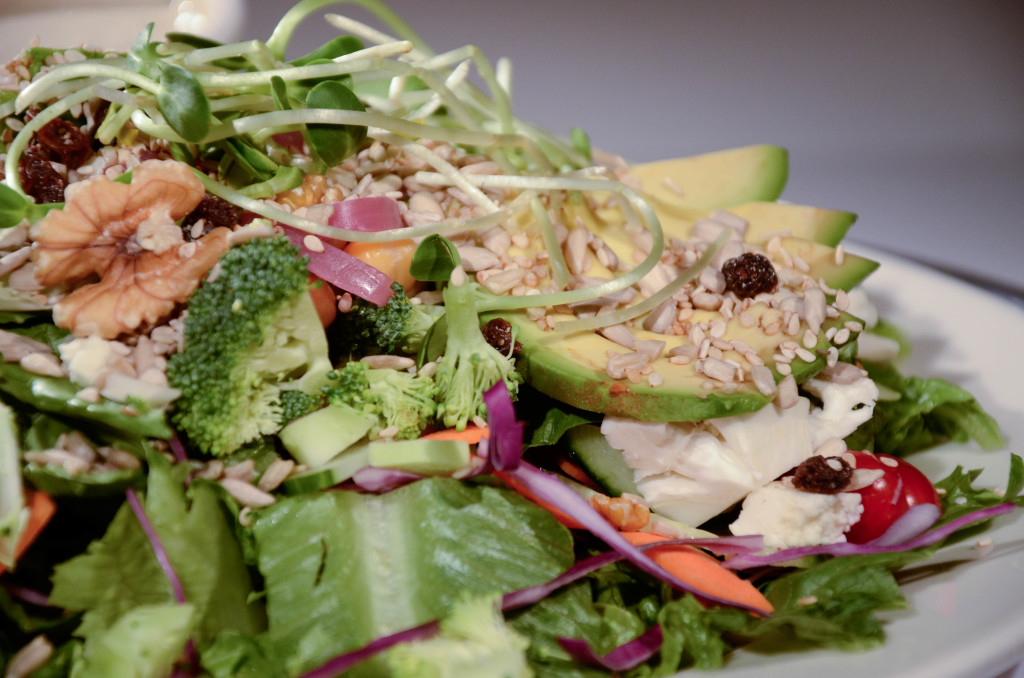
Inn Season (GF)
Robust salad of romaine lettuce, broccoli, cauliflower, carrot, red cabbage, tomato, cucumber, garbanzo beans, sunflower sprouts, marinated red onion and raisin-nut mix. Served with your choice of dressing.
Salad Toppings.
- Small includes one topping – additions will be $1. each
Large includes two toppings – additions will be $2. each
Choose from the options below to add to any salad.
Kalamata olives, balsamic raisins, raisin-nut mix or artichoke hearts. Garlic-roasted walnuts, salad tofu. Brick cheese, vegan Daiya cheese, Feta, Bleu, or Chevre cheese, avocado, roasted beets, or sautéed tofu (SF without tofu and with SF dressing)
- Small includes one topping – additions will be $1. each
Available Dressings. (All GF)
- Balsamic Vinaigrette (SF)
Olive oil, salt, pepper and balsamic vinegar
- Sesame Ginger Vinaigrette (SF)
Sesame oil, garbanzo miso, brown rice vinegar, ginger, lemon juice, salt and pepper
- Caesar (SF/Dairy only)
Pommery mustard, olive oil, sour cream, asiago cheese, spices and garlic
- Greek (SF)
Olive oil, red wine vinegar, lemon juice, garlic, salt, pepper and herbs
- Tahini
Sesame butter, lemon juice, orange juice, cider vinegar, garlic, safflower oil, maple syrup, tamari, herbs and spices
- Thousand Island
Non-dairy mayo, tomato, red pepper, scallions, cider vinegar, onion, pickles and capers
- - - Also Available
Lemon, extra virgin olive oil, balsamic vinegar, ume plum vinegar, and cider vinegar
- Balsamic Vinaigrette (SF)
Side Dishes and Extras.
-
Roasted Potatoes (GF)
-
Beans
Black (GF/SF), Pinto (GF)
Organic
-
Maple Tempeh (GF)
Organic
-
Blue Tortilla Chips (GF/SF)
-
Salsa (GF/SF)
Beverages.
-
Smoothie (GF/SF)
All fruit. A refreshing blend of strawberries, bananas and apple juice.
-
Juices – Fresh Made (GF/SF)
Start with organic carrot and add any of the following: apple, beet, celery or fresh ginger.
-
Natural Sparkling Sodas (GF/SF)
(Fruit Juice Sweetened, No Sugar) Choose from: Raspberry, Black Cherry, Grape, Cranberry, Peach, Mango, Mandrin Lime.
-
Sweetened with Agave nectar (no sugar)
-
(16.9 oz.)
Contact Us

Email:
innseasoncafe@yahoo.com
Phone:
(248) 547-7916
(248) 547-2835 fax